2026-10-24 ·
Finding Roof Leaks After Heavy Broward Rains
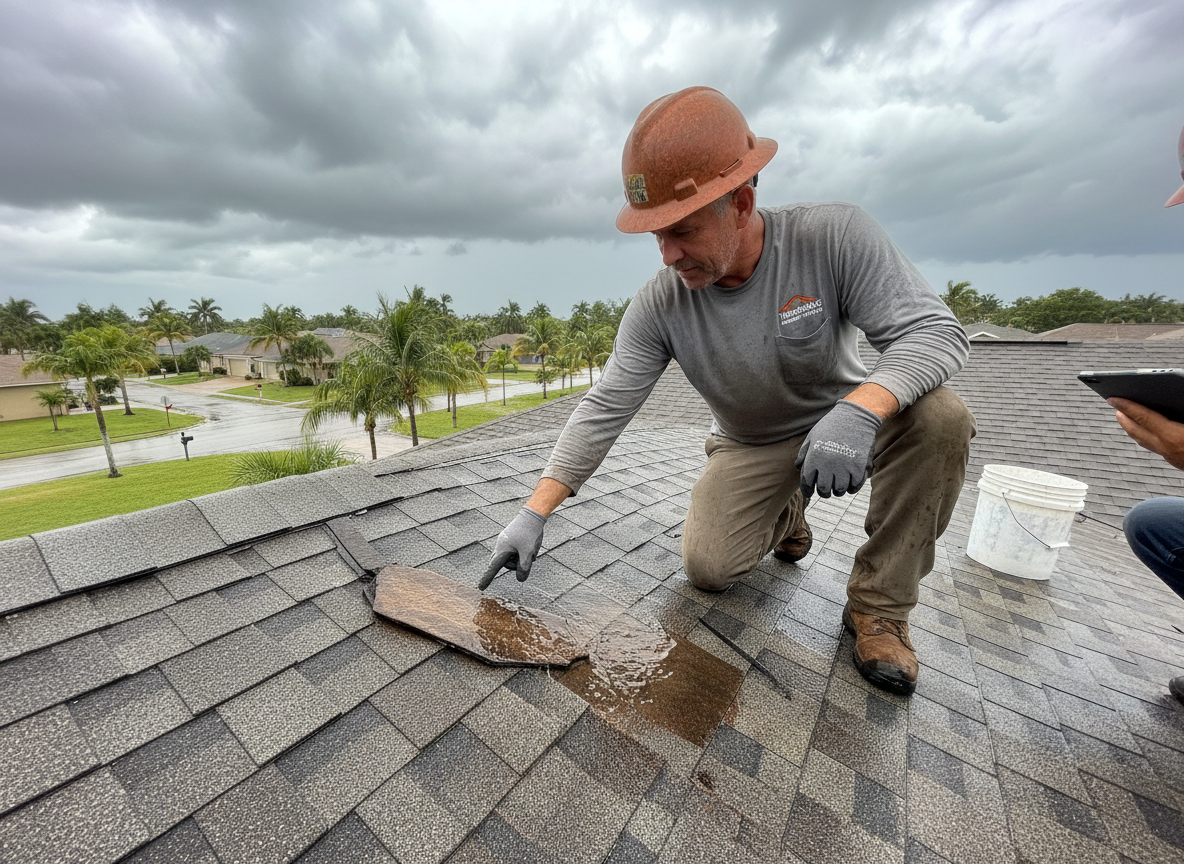
After heavy Broward rains, start by entering the attic during daylight and looking for wet insulation or darkened plywood sheathing near the ridge. Tamarac homes from the 1970s and 1980s commonly have concrete tile or asphalt shingle roofs that develop seam failures where wind-driven rain pushes water under the underlayment. Focus first on areas above bathrooms and hallways because plumbing vents and skylights are frequent entry points in this housing stock.
Checking Attic Insulation and Sheathing
Walk the attic beams slowly and shine a flashlight across the underside of the roof deck. Dark streaks or soft spots in the plywood indicate water has bypassed the tiles or shingles and reached the felt or synthetic underlayment. In Tamarac neighborhoods east of Pine Island Road, older homes often show this pattern after sustained downpours because the original felt paper has aged and lost flexibility. Mark each wet spot with painter’s tape so you can correlate it later with exterior roof features. If insulation is damp, remove a small section to check whether the moisture has reached the ceiling drywall below.
Examining Interior Ceilings and Walls
Return downstairs and scan popcorn ceilings and crown molding for yellow-brown rings or bubbling paint. These stains usually appear 24 to 48 hours after the rain stops because water travels along rafters before dripping. In single-story Tamarac ranch homes, leaks often show first above sliding glass doors where the roof-to-wall transition meets the lanai. Press gently on suspect drywall; if it feels soft or flakes, water has already reached the paper facing. Photograph each mark with a date stamp before calling for a professional assessment.
Inspecting Exterior Flashing and Valleys
From the ground or a stable ladder, look at step flashing along chimneys and wall intersections. Heavy Broward rains push water sideways under lifted flashing when sealant has cracked from UV exposure. Check valleys where two roof planes meet; accumulated leaves and pine needles from nearby trees slow drainage and force water under shingles. Tamarac properties near the Turnpike often have more debris because of wind patterns carrying material from commercial lots along Commercial Boulevard. Note any displaced tiles or missing ridge cap pieces that allow direct entry during the next storm.
Knowing When to Schedule a Professional Inspection
If you find multiple wet spots or active dripping, contact a roofing contractor that offers 24/7 response from its Tamarac base at 6401 W Commercial Blvd. A thorough roof inspection services visit includes moisture metering of the deck and infrared scanning to locate hidden saturation without tearing off tiles. Homeowners who also want to evaluate wind-related issues can review Inspecting for Wind Damage Without Climbing Your Roof for additional techniques that complement rain-leak searches. Early detection prevents ceiling repairs that often cost more than addressing the roof entry point itself.