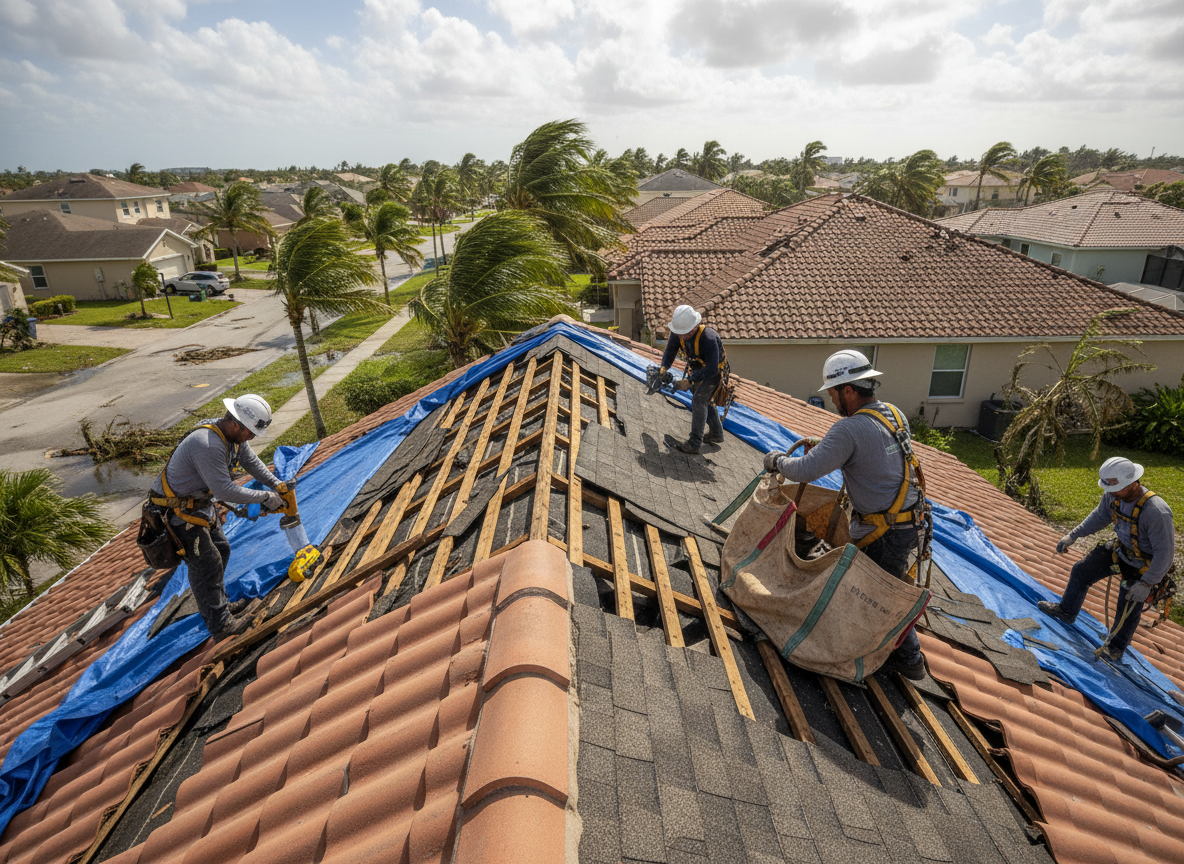
Tamarac sits in Broward County where summer thunderstorms and tropical systems send sustained winds and driving rain against asphalt shingle and concrete tile roofs common on 1970s through 2000s homes. Storm damage often shows first at ridge vents, valley flashings, and perimeter drip edges where wind-driven water works under the underlayment and reaches the deck. Homeowners notice interior ceiling stains or attic moisture long before the roof itself looks compromised from the street.
Repair begins with a full roof plane inspection that checks every penetration, step flashing, and boot rather than only the obvious torn shingle. In older Tamarac neighborhoods, decking can be 7/16 inch OSB that softens quickly once water reaches it, so crews lift only the damaged courses and replace saturated sections without stripping the entire roof. All work follows current Florida Building Code wind-load requirements for the exposure category that applies to most single-story and low-slope homes west of the Turnpike.
After temporary tarping to stop active leaks, permanent repairs use matching shingles or tiles, new ice-and-water shield in valleys, and upgraded ridge vent where the original unit failed. Crews also check soffit and fascia for wind uplift because those areas frequently pull away during the same storm that damages the field. Final walkthrough includes photos of every repaired section so the homeowner can see exactly what was addressed.
Technician insight
In Tamarac, the thing that catches most people out with storm damage roof repair is how quickly water gets behind the fascia on 1980s and 1990s homes when the original aluminum drip edge lifts. Once that happens the soffit fills and you end up chasing rot two or three rafter bays back even though the shingles on top still look mostly intact.
Wind-driven rain under ridge vent
A homeowner in Tamarac near Woodmont called after a line of storms; ceiling stains appeared above the master closet. Inspection showed the ridge vent had lifted on the north slope, allowing water to run down the deck and pool at the collar tie. Crew replaced the vent section, installed new step flashing where it met the chimney, and swapped three courses of saturated shingles. No further leaks appeared after the next heavy rain.
How it works
- 1
Initial Assessment
Technician arrives within hours, documents visible damage from ground and attic, and notes any interior water stains or soft decking.
- 2
Detailed Inspection
Full roof walk identifies every affected shingle, flashing, and penetration while checking for hidden moisture with a moisture meter.
- 3
Temporary Protection
Secure tarps and edge barriers are installed to prevent further water entry until permanent repairs can begin.
- 4
Permanent Repair
Damaged materials are replaced to code, flashings renewed, and the area blended with existing roofing to restore weather tightness.
- 5
Final Walkthrough
Homeowner reviews photos and completed work; any remaining concerns are addressed before the crew leaves.
Pricing
Upfront written quote provided after inspection; cost depends on extent of deck damage and materials required.