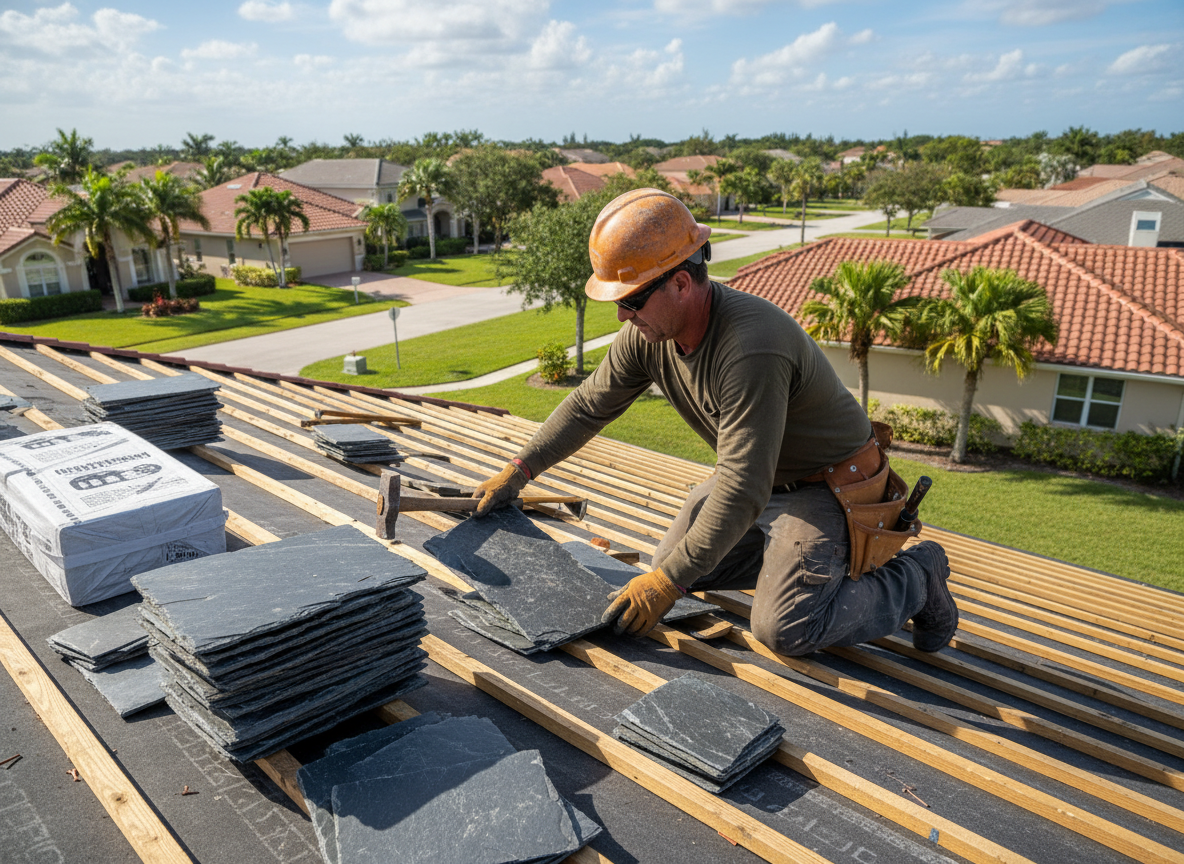
Slate roofs in Tamarac demand extra attention to underlayment and flashing because of the region's frequent heavy downpours and sudden wind gusts that accompany summer storms. Many homes in neighborhoods like Woodmont and Kings Point were built decades ago with lighter roof structures that now carry the load of imported slate tiles, so any missed seam or degraded felt quickly turns into interior leaks during the wet season. Proper ventilation under the slate is critical in Broward County's humidity to prevent trapped moisture from breaking down the decking over time.
When replacing or repairing slate, crews must account for the material's weight during removal and reinstallation, especially on single-story ranch homes common throughout Tamarac. High-wind zones require specific clip and nail patterns that meet current Florida Building Code requirements for uplift resistance, and skipping these steps leaves the roof vulnerable during hurricane season. Local crews also watch for salt-air corrosion on metal components when working near the western edges of the city closer to the Everglades.
Edge details around chimneys, skylights, and valleys are frequent failure points in Tamarac because driving rain finds every gap when the slate shifts slightly from thermal expansion. Experienced roofers use ice-and-water shield in these areas even though true ice dams are rare, simply because the volume of water during a typical afternoon thunderstorm exceeds what standard felt can handle. Matching replacement tiles requires sourcing from suppliers familiar with the original Welsh or Vermont slate used on older local homes to keep the roof looking uniform.
Technician insight
In Tamarac, the thing that catches most people out with Slate roofing is the original roof deck on 1970s-80s homes in areas like Tamarac Lakes or Woodmont not being built to carry the weight, so one loose tile during a heavy August rain can soak the attic before anyone notices.
Slate Shift After Summer Storms
Homeowner in Kings Point noticed water stains after repeated thunderstorms. Inspection showed several cracked tiles and failed flashing around a skylight on a 1980s ranch. Crew replaced damaged slate, upgraded the underlayment at the valley, and resealed all penetrations. No further leaks reported through the next rainy season.
How it works
- 1
Site Assessment
Inspect the existing slate, decking, and flashing on site in Tamarac to identify weight-related stress and moisture intrusion points.
- 2
Material Verification
Confirm slate type and source compatible replacements while checking rafter spacing on homes built in the 1970s and 1980s.
- 3
Underlayment Upgrade
Install enhanced synthetic underlayment and ice-and-water shield at all valleys and penetrations to handle local rainfall intensity.
- 4
Tile Installation
Secure slate with code-approved clips and nails, then detail all edges for wind resistance before final walkthrough.
Pricing
Cost depends on roof pitch, access, and extent of decking repairs; upfront quotes provided after inspection.