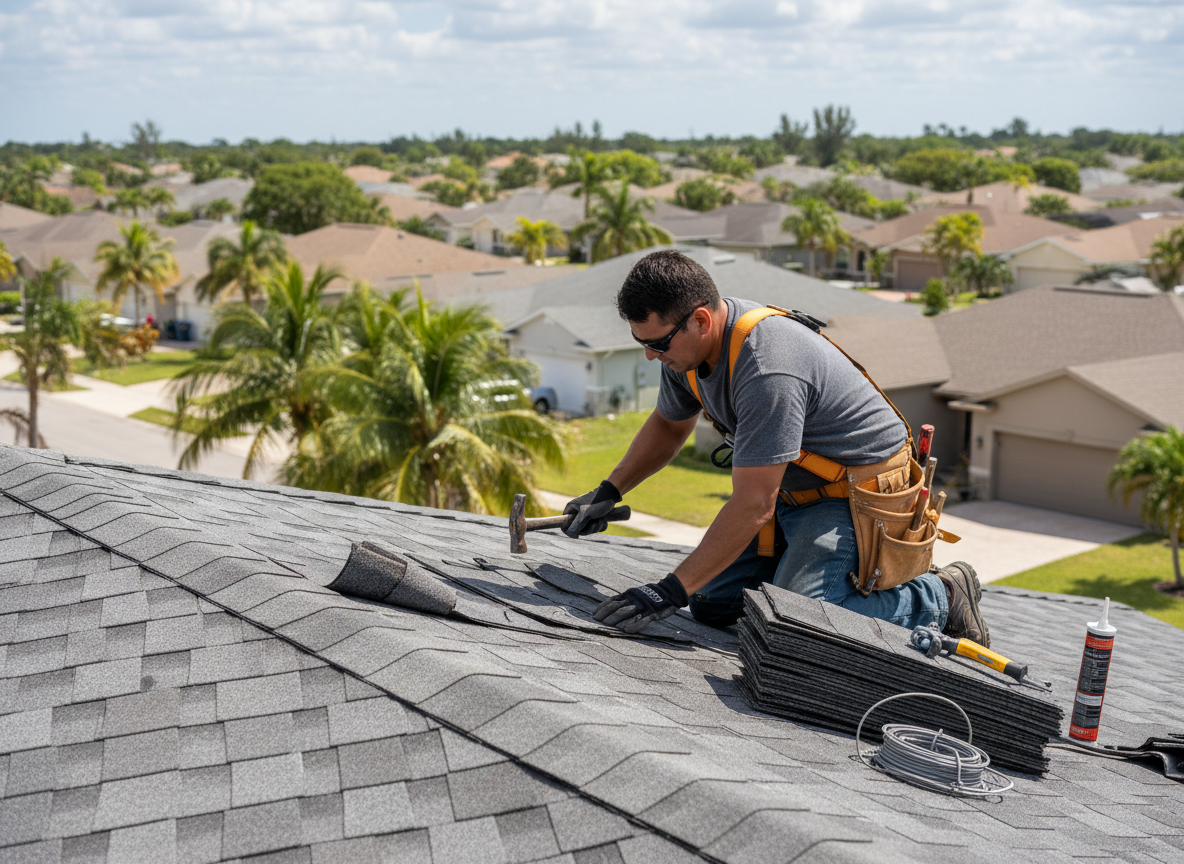
Tamarac homes, many built between the 1970s and early 1990s in neighborhoods such as Woodlands and Mainlands, typically carry three-tab asphalt shingles that lose granules quickly under intense Florida UV and repeated summer downpours. When leaks appear near valleys or plumbing vents, the underlying felt often has already deteriorated because standing water sits longer on the flat Broward County terrain. Matching the original shingle profile and color is essential; newer architectural shingles can create noticeable ridges that draw attention during HOA reviews.
Wind-driven rain from afternoon thunderstorms commonly lifts shingles along the southern and western exposures first. Technicians check for nail pops caused by thermal expansion and for deteriorated drip edge that allows water to wick under the first course. Florida Building Code updates after Hurricane Wilma require enhanced fastening in high-velocity zones, so any repair larger than one square must meet the current uplift requirements even on older roofs.
Homeowners often attempt spot fixes with sealant alone, but this traps moisture and accelerates deck rot once the rainy season begins. Proper repair involves removing the affected course, inspecting the deck for softness, and installing new underlayment before the replacement shingles. Cleanup includes magnetic sweeping for stray nails that could damage vehicles in the driveway or street.
Technician insight
In Tamarac, the thing that catches most people out with Shingle roof repair is how our frequent summer storms push water under lifted shingles on south-facing slopes in 1980s homes around Woodlands, where the original felt has already turned to dust.
Wind-Lifted Shingles After Storm
A homeowner in Tamarac noticed water stains near a bedroom window after several days of heavy rain. Inspection revealed lifted shingles and rotted felt along the south edge. The crew replaced the damaged course, added new synthetic underlayment, and secured the edge with additional fasteners rated for local wind loads. No further leaks appeared during the next rainy season.
How it works
- 1
On-Site Assessment
Technician climbs the roof to map damaged shingles, checks deck integrity, and notes any active leaks inside the attic.
- 2
Damage Documentation
Photos and measurements are taken for the homeowner and any required permit records in Tamarac.
- 3
Material Matching
Shingles are selected to match existing color, thickness, and granule type before work begins.
- 4
Repair Execution
Damaged sections are removed, deck repairs made if needed, new underlayment installed, and shingles fastened to code.
- 5
Final Walk-Through
Interior and exterior are inspected for remaining moisture, and the homeowner receives care instructions.
Pricing
Pricing depends on square footage affected, deck repairs needed, and whether permits are required by the city of Tamarac.