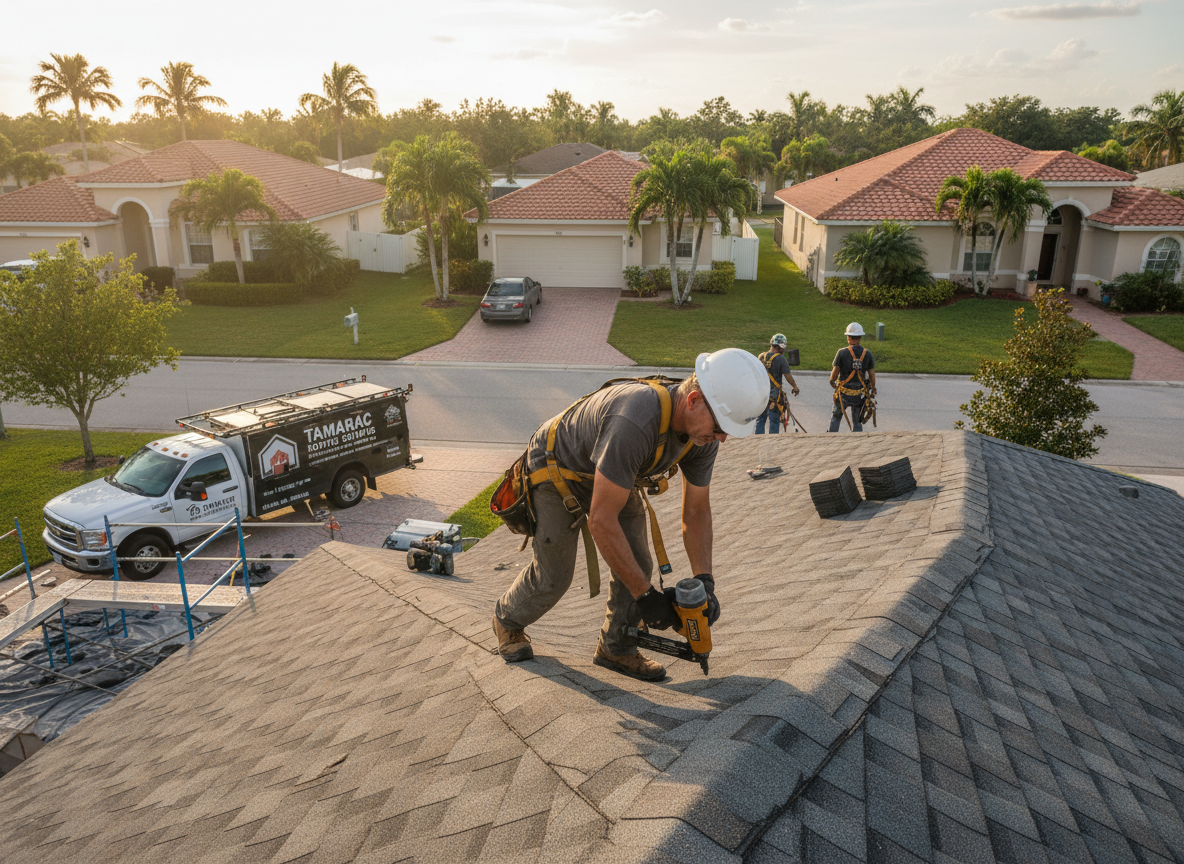
Tamarac homes built from the 1970s onward often feature concrete tile or asphalt shingle roofs exposed to intense Florida sun, frequent afternoon thunderstorms, and hurricane-force winds during season. These conditions accelerate granule loss on shingles and crack tiles along ridges where expansion joints fail first. Broward County codes require impact-rated materials in high-velocity zones, so any repair must match current fastening schedules or risk permit rejection during inspection.
Heavy seasonal rains pond on low-slope sections common in Tamarac Lakes and Woodmont, pushing water under flashing at valleys and chimneys. Soil here is sandy with poor drainage, so roof runoff must be directed away from foundations to prevent settling around slab edges. We routinely replace deteriorated drip edge and step flashing before leaks migrate into attics during the next storm cell.
Edge cases include flat-roof sections on 1980s additions where modified bitumen blisters from trapped moisture and UV degradation. Replacing only the affected membrane without addressing underlying insulation leads to repeat failures within two seasons. Proper ventilation upgrades during re-roofing also reduce heat buildup that shortens shingle life in this subtropical climate.
Homeowners in Coral Springs border areas sometimes overlook tree canopy debris that traps moisture against tiles, promoting algae and fastener corrosion. Annual inspections before June catch these issues while access remains straightforward and before wind-driven rain tests every seam.
Technician insight
In Tamarac, the thing that catches most people out with roofing contractors in my area is how quickly afternoon storms drive water under lifted shingles on 1970s homes in Woodmont when the original felt underlayment has dried out and cracked.
Hurricane Prep on 1978 Tamarac Home
Homeowner noticed missing tiles after spring storms. We found corroded fasteners along the south-facing ridge in a Woodmont neighborhood. Replaced underlayment and installed new impact tiles with upgraded clips. Roof passed county inspection before hurricane season.
How it works
- 1
Initial Assessment
We arrive at the Tamarac address, walk the roof, and document wind damage, flashing condition, and underlayment exposure.
- 2
Detailed Report
Photos and measurements are compiled into a scope that references Broward County wind-load requirements for the specific neighborhood.
- 3
Material Selection
Impact-rated shingles or tiles are chosen to match existing profiles while meeting current fastening standards.
- 4
Execution and Cleanup
Work proceeds with daily debris removal, followed by final walkthrough to confirm drainage and ridge integrity.
Pricing
Upfront quotes provided after on-site inspection; final cost depends on roof pitch, access, and material choice.