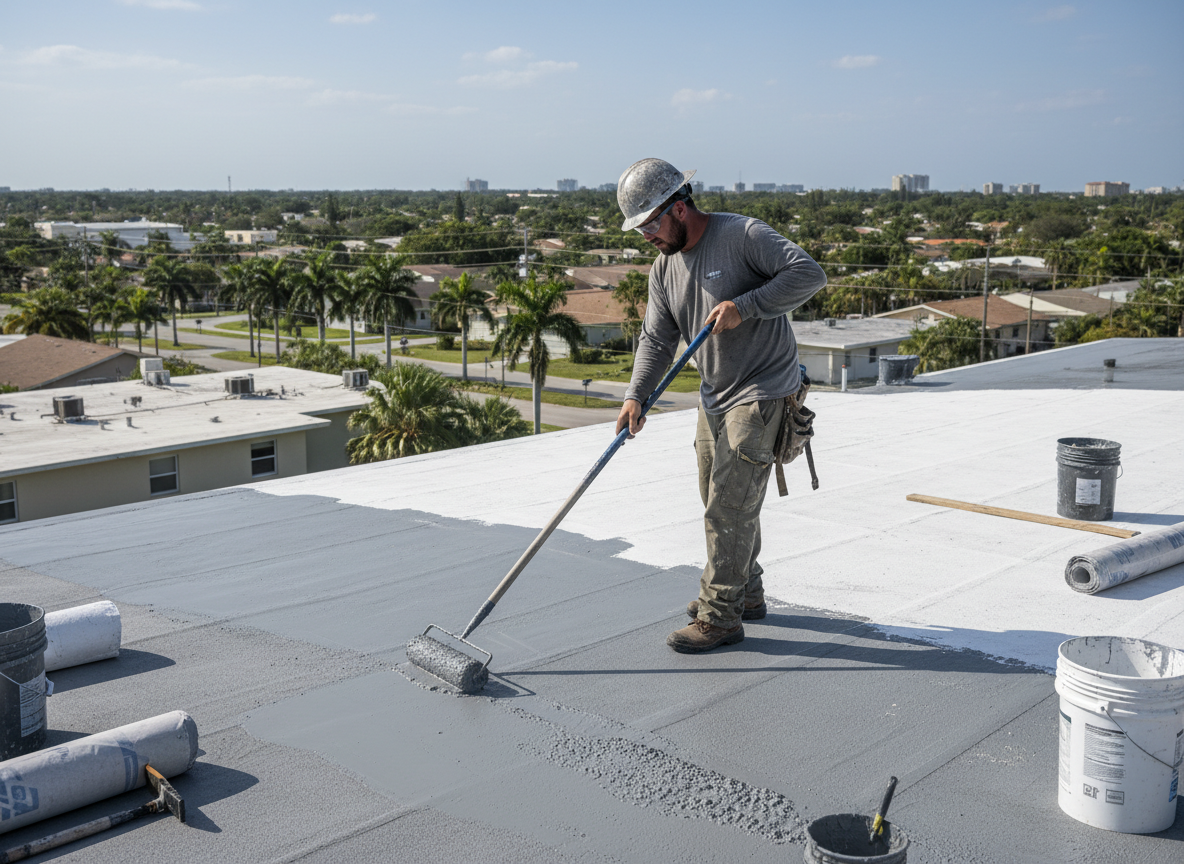
Tamarac homes built from the 1970s onward often feature flat or low-slope roofs that collect water during the long rainy season. These surfaces need elastomeric coatings or reinforced membrane systems that expand and contract with daily temperature swings and resist ultraviolet degradation. Without proper surface preparation, including removal of old chalking material and treatment of seams around HVAC curbs, water finds its way under the coating within the first hurricane season.
Broward County wind-load requirements affect how waterproofing is applied on edges and penetrations. Installers must secure termination bars and use compatible flashing tapes rated for high-velocity wind zones. In neighborhoods such as Woodlands and Tamarac Lakes, many roofs sit above stucco walls where moisture can wick upward if the waterproofing does not extend far enough down the fascia.
Ponding water near scuppers and internal drains is common on commercial and residential flat roofs in the area. A single missed low spot during application can lead to blistering after repeated saturation. Experienced crews check slope with a laser level before coating and add tapered insulation where standing water exceeds a quarter inch after forty-eight hours of dry weather.
Application timing matters because afternoon thunderstorms can interrupt curing. Crews typically start at first light and monitor dew point so the coating bonds before humidity rises. Homeowners in Tamarac notice fewer callbacks when the contractor returns after the first heavy rain to touch up any thin spots that appear.
Technician insight
In Tamarac, the thing that catches most people out with roof waterproofing is how many 1980s flat roofs were built with almost no slope and scuppers that sit too high, so water sits for days after every storm until the coating blisters from underneath.
Ponding on a Tamarac flat roof
A single-story home near Commercial Boulevard showed repeated interior leaks after summer storms. Inspection found standing water along the back scupper because the original coating had cracked at the low point. Crew cleaned the surface, added tapered insulation to create positive drainage, then applied a reinforced acrylic system. No leaks appeared after the next three rain events.
How it works
- 1
Site Assessment
Technician inspects the entire roof surface, checks for ponding, measures slope at drains, and notes all penetrations and existing coating condition.
- 2
Surface Preparation
Power washing removes dirt and loose material, seams are reinforced, and any damaged areas receive spot repairs before primer is applied.
- 3
Coating Application
Elastomeric or acrylic coating is rolled or sprayed in two coats with proper mil thickness, paying special attention to edges, flashings, and HVAC curbs.
- 4
Final Walk and Touch-Up
After the first rain event the roof is rechecked for thin spots or missed seams and corrected the same day if needed.
Pricing
Upfront quotes provided after on-site inspection; cost depends on roof size, existing condition, and number of penetrations.