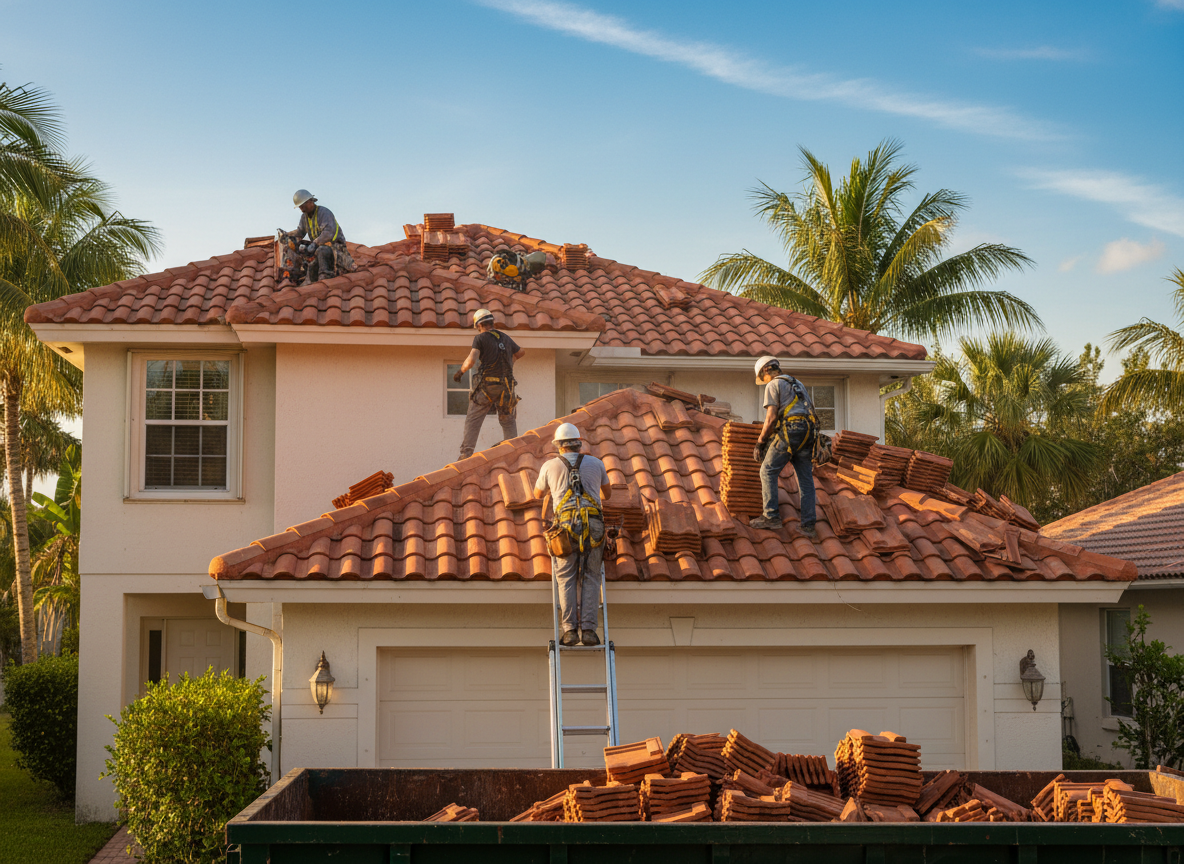
Tamarac homes built from the 1970s onward often carry asphalt shingle or modified bitumen roofs that face constant sun exposure and sudden downpours. Heat accelerates granule loss while heavy summer storms test flashing around chimneys and valleys. Replacing or repairing these roofs requires selecting impact-rated materials that meet current Broward County wind standards without overbuilding on older truss designs common in the area.
When leaks appear near skylights or bathroom vents, the cause is frequently deteriorated underlayment rather than the visible shingles. In Tamarac neighborhoods west of Commercial Boulevard, tree cover from older plantings traps moisture against the decking, leading to rot that spreads faster than in drier inland spots. Proper deck inspection and replacement of affected plywood sections prevents callbacks that occur when only surface layers are addressed.
Hurricane season brings additional scrutiny to ridge vents and eave details. Many Tamarac residences still have original 1980s installations that lack modern secondary water barriers. Upgrading these during a re-roof adds protection against wind-driven rain without requiring full structural changes, provided the existing deck meets code pull-out values for new fasteners.
Seasonal Considerations
Work in Tamarac slows during peak afternoon thunderstorms from June through September. Crews schedule tear-offs for early morning hours to keep decks dry before new underlayment goes down. Homeowners along W Commercial Blvd often request phased scheduling so one side of the house stays covered while the other is worked on.
Technician insight
In Tamarac, the thing that catches most people out with Residential Roofing is how quickly afternoon thunderstorms soak through missing underlayment on 30-year-old decks around the 6401 W Commercial Blvd corridor. Homeowners often think a few missing shingles are the whole problem until we open the attic and find widespread rot from trapped moisture under the original felt.
Leak After Summer Storms
A homeowner in Tamarac noticed water stains on a bedroom ceiling after repeated June rains. We found failed flashing around a bathroom vent and rotted decking beneath the original underlayment. We replaced the affected plywood, installed new step flashing, and added ice-and-water shield before re-shingling the section. The attic stayed dry through the rest of the season.
How it works
- 1
Initial Assessment
Walk the roof and attic to map leaks, check ventilation, and note deck condition.
- 2
Material Selection
Match shingle weight and color to existing homes while confirming wind ratings for Broward County.
- 3
Deck and Flashing Work
Replace damaged plywood and upgrade step flashing around penetrations.
- 4
Installation and Cleanup
Install new underlayment, shingles, and ridge vent, then magnet-sweep the yard.
- 5
Final Walkthrough
Review drainage, ventilation, and warranty details with the homeowner.
Pricing
Pricing follows roof size, layer count, and any deck repairs found during inspection; written quotes provided before work begins.