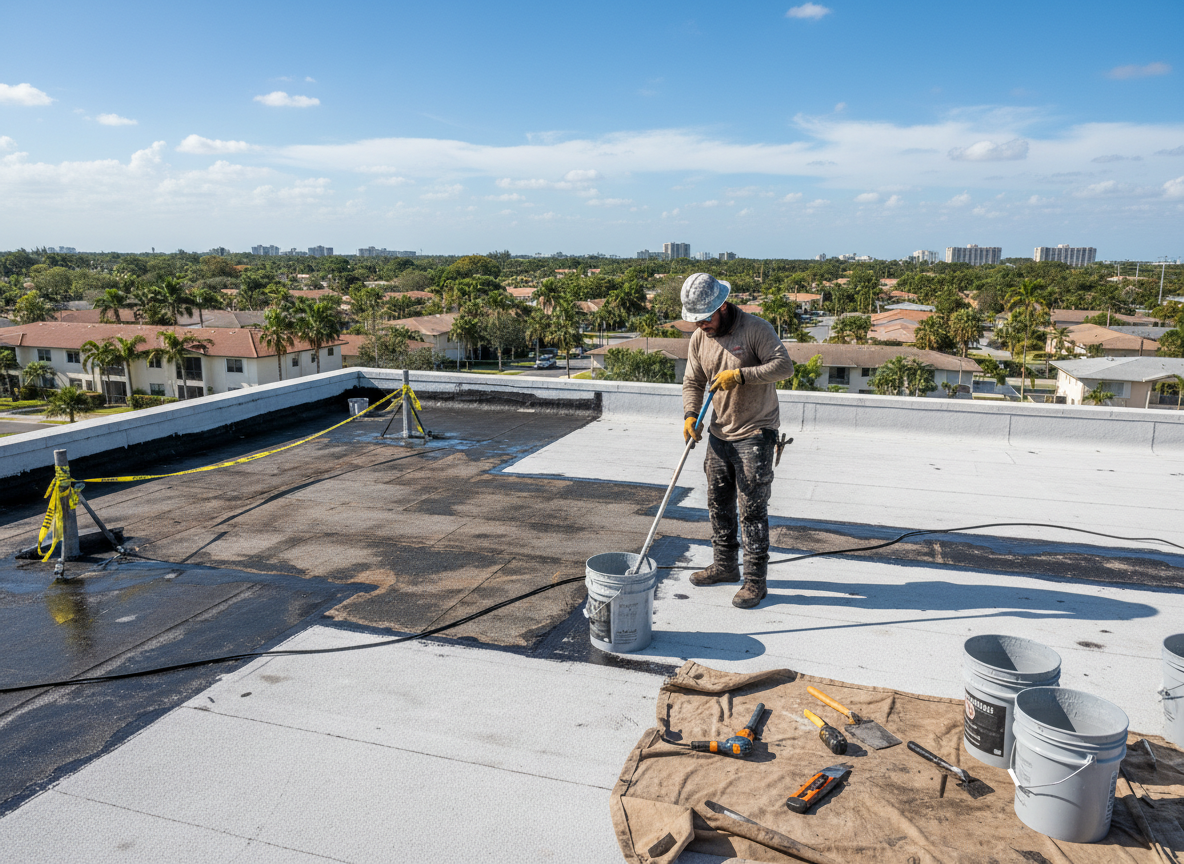
Tamarac flat roofs face constant stress from intense summer downpours and the high humidity that keeps surfaces wet for days. Modified bitumen and EPDM membranes are common on 1970s-1990s homes and strip plazas along Commercial Boulevard, yet these materials blister and split when water sits in low spots created by settling decks. Technicians start by checking for saturated insulation beneath the membrane, because simply patching the top layer lets moisture migrate and rot the substrate.
Broward County requires permits for any roof work that exceeds 25 percent of the surface, and inspectors look for proper cricket slopes and sealed penetrations around HVAC curbs. In Tamarac, many flat roofs sit behind parapets that trap leaves and debris from nearby royal palms, so crews remove buildup before repairs to prevent repeat ponding. Edge details at the gravel stop or fascia often fail first during tropical storms because wind-driven rain finds gaps in aged flashing.
Repairs typically involve cutting out damaged sections, drying the insulation if possible, and installing new membrane with compatible adhesives. On older buildings near the Turnpike, crews also check for rust on metal decks exposed by previous leaks. Homeowners notice interior stains or musty odors first, but the real damage is often several feet beyond the visible mark once the membrane is lifted.
Technician insight
In Tamarac, the thing that catches most people out with flat roof repair is how quickly water sits behind parapets on 1980s buildings along Pine Island Road. Once the membrane blisters, homeowners think a small patch will fix it, but the insulation underneath is already saturated from repeated summer storms and needs removal or the leak returns within one season.
Ponding on a Tamarac plaza roof
A strip-center owner noticed water stains inside a unit after a July storm. Inspection found a low spot behind the parapet where leaves had blocked the scupper. Crew removed saturated insulation, added a tapered cricket, and installed new EPDM over the section. Drainage improved and no further interior leaks occurred during the next rainy season.
How it works
- 1
Initial Inspection
Technician examines the entire roof surface, checks for ponding, membrane splits, and flashing condition from the 6401 W Commercial Blvd base.
- 2
Moisture Mapping
Infrared scan identifies wet insulation areas common after Tamarac's rainy season before any cutting begins.
- 3
Targeted Repair
Remove damaged sections, replace insulation where needed, and install new membrane with sealed seams.
- 4
Final Walk and Documentation
Verify positive drainage, photograph completed work, and note any future maintenance items for the property owner.
Pricing
Cost depends on roof size, extent of wet insulation, and whether a full section or isolated patches are needed.